Belt, Pockets or Handheld Bottle: Where Should Small Essentials Go?
Running essentials fit better when the carrying method matches the load: compare pockets, belts and handheld bottles by access, bounce and comfort.
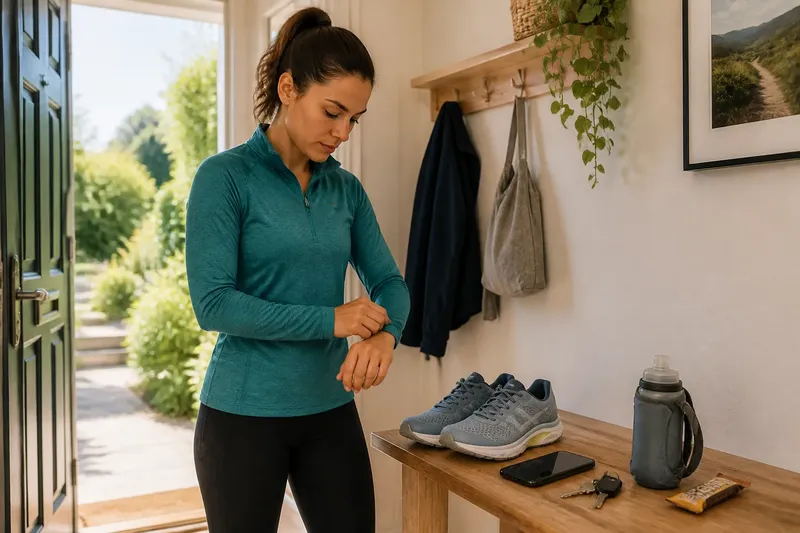
At the front door, Maya has her phone, a key, a soft flask and a snack laid beside her running shoes. She wants to carry her essentials without a pocket thumping against her hip or a bottle occupying the hand she uses to adjust her sleeve. This invented, hypothetical situation makes a useful starting point for choosing between running belt, pockets or a handheld bottle: match the carrier to the load and the way you want to reach it.
What does Maya actually need to carry?
Maya is planning an ordinary run from home, not packing for every possible complication. Her phone is useful for navigation and contact, the key needs to stay secure, and the snack is there for the part of the outing when she wants it. She also wants water available, but she has not decided whether to bring it.
That distinction matters. A carrier can feel awkward not because it is poorly designed, but because its job does not match what is inside it. A single key is a different load from a phone, food and a bottle, and the right choice may change when the plan changes.
Before choosing equipment, Maya separates the load into three groups: items she must bring, items she may use during the run, and items she can leave behind. This keeps the decision focused on actual needs rather than on how much a piece of running kit appears able to hold.
When are pockets enough for running essentials?
Pockets work well when the garment already fits securely and the load is light. A small zipped pocket can keep a key from slipping out, while a phone pocket designed to hold a phone close to the body can reduce the loose movement that comes from an ordinary open pocket.
Maya checks the pockets in her running tights and jacket before adding another item to her kit. She puts the key in a secure pocket and the phone in the pocket intended for it, then moves around in the outfit. If the phone shifts, pulls fabric down or rubs against her leg, those pockets are not a comfortable solution for this load.
Pocket placement also affects access. A back waistband pocket may be secure but harder to reach while moving; a jacket pocket may be convenient but warm on a mild day. Clothing pockets are often the simplest option when they keep the items close and do not force a runner to carry extra fabric or gear.
For Maya, the pockets hold the key and phone, but there is no sensible place for the snack and soft flask. She could carry them in her hands, but that would leave both hands occupied and make it harder to adjust her clothing. It is time to compare a belt with a handheld bottle rather than assume one carrier must do every job.
How should she compare a belt and a handheld bottle?
A running belt distributes small items around the waist and keeps both hands free. It can hold a phone, key and snack, depending on its compartments and fit. A handheld bottle keeps water immediately accessible and may have a strap or sleeve that helps it sit in the hand without requiring a tight grip.
The trade-off is where the load moves. A belt can bounce or ride up if it is loose, overloaded or poorly matched to the runner’s shape. A handheld bottle adds weight and motion to one arm, and its strap can feel distracting if it shifts or presses against the hand.
Maya tries on a belt with the actual items she plans to carry, rather than judging it while empty. She adjusts it so it sits where intended, checks that the phone can be reached, and walks briskly before taking a few easy running strides. She does the same with the handheld bottle, paying attention to whether the weight changes her arm swing or makes her want to switch hands.
Imagine Maya finds that the belt stays in place with her phone, key and snack, while the bottle feels comfortable during a short trial. For a run where she wants water, she can carry the bottle and use the belt for the other items. If she decides the bottle distracts her and water is not needed for that outing, the belt alone may be the cleaner arrangement.
Which carrying option suits each kind of load?
The best option follows the load, the route and the kind of access the runner wants. Maya uses this comparison to make a decision for each outing instead of buying or packing around a single default:
- One key and a small phone: Use secure garment pockets if they hold both close and do not bounce. If the phone moves or the pocket is awkward to reach, consider a slim belt.
- Phone, key and a snack: A belt is often easier to organize, especially when the garment pockets are already occupied. Check that the phone compartment closes securely and the snack does not press uncomfortably against the body.
- Water plus a few small items: A handheld bottle can keep water accessible, while pockets or a belt carry the phone and key. This divides the load rather than asking a bottle strap to hold everything.
- A phone that must be reached often: Choose the pocket or belt compartment that lets the runner retrieve it without fumbling. A secure carrier is less useful if its closure is difficult to manage on the move.
- A run with no need for water or snacks: Leave those items at home and use pockets or a light belt for the essentials. An empty carrier can still shift, so carrying less may be more comfortable than taking spare capacity.
These are starting points, not fixed rules. A garment’s pocket design, a belt’s shape and the runner’s preferred fit all affect how a particular load feels.
How can Maya check for bounce and reach?
Maya tests each arrangement with the objects inside it, because an empty belt or pocket cannot show how the load will move. She starts with a walk, then tries a short stretch of easy running on a familiar, safe path. She pays attention to shifting, rubbing, pressure and whether anything feels difficult to reach.
She changes only one part of the setup at a time. If the belt bounces, she checks its position and whether it is carrying more than it needs to; if a phone pocket pulls the fabric, she tries a different pocket or carrier. If a handheld bottle feels unsteady, she checks its strap and hand position rather than clenching harder.
Access deserves its own check. Maya confirms she can open a zipper, take out the snack and return the phone without dropping anything or losing her balance. She does not need to rehearse every movement on a crowded route; a calm trial close to home makes it easier to notice a poor fit.
Where an item’s care, closure or use depends on its label or manufacturer instructions, Maya follows those directions rather than improvising.
What do runners ask about carrying small essentials?
Is a running belt better than pockets?
Neither is automatically better. Pockets are convenient when they hold the load securely without movement, while a belt can offer more space and keep hands free when clothing pockets are unsuitable.
Can a handheld bottle carry a phone and key?
Some handheld systems include a small storage compartment, but its size and closure determine whether it suits a phone or key. Check the actual compartment with the items you plan to bring; do not assume a bottle’s hand strap is also a secure storage pocket.
How do I stop a running belt from bouncing?
Try adjusting its position and removing anything you do not need for that outing. Then check the fit while moving, since a belt that feels stable while standing may shift once the contents start moving.
Should I carry my phone on every run?
That depends on your plans, personal preferences and what you may need during the outing. If you bring it, choose a secure pocket or compartment that you can reach without disrupting your stride.
What does Maya take out the door?
Maya’s decision changes with the load. For a run when she wants her phone, key, snack and water, she uses the belt for the small essentials and carries the handheld bottle only if that feels comfortable during her short trial. For a lighter outing, she leaves the snack and bottle behind and uses the garment pockets if they hold the phone and key securely.
The useful lesson is not that one carrier wins. Running essentials are easier to manage when each item has a specific place, the full load stays close without irritating movement, and anything needed during the run remains reachable. Before heading out, Maya checks the route’s demands, chooses only the items she needs and takes a moment to see how they sit in motion.
For the next run, make the same decision with the clothes and objects you actually plan to use: secure the key, check the phone’s movement, and decide whether water belongs in your hand or nowhere at all.